
Today I take you to discover a country that is much desired but is not extremely touristy indeed! I'm talking about Bolivia a buffer state between Peru and Chile on the Pacific Ocean side and between Paraguay, Argentina, and Brazil on the continental side. Bolivia is an extremely interesting but very poor territory with many things to see especially in terms of landscapes and nature. The Salar de Uyuni salt desert is obviously very famous but in reality, there is a lot more to visit and admire such as the Amazon Forest.
La Paz
The most famous city is La Paz which is actually called Nuestra Señora de la Paz: it is not really the capital in the sense that Bolivia has two capitals, one governmental and one political, namely La Paz and Sucre. La Paz holds the record for the highest metropolis in the world with an altitude ranging between 3400 and i
4100 meters above sea level It is not a city that I particularly loved but it is undoubtedly very interesting. The most particular experience was visiting the witches market and getting to the top with the cable car (Be careful because it is the most dangerous area of the city). In the street dedicated to witches, you will find puppets, animal skeletons, stuffed animals, fortune tellers, seers. It is an authentic place even if it is losing much of its authenticity giving way to tourism and therefore to rip-offs. Be careful. Apart from a couple of squares where you can take a tour, stay there just the bare minimum to coordinate your trip to Bolivia or participate in nearby excursions, the most famous of which is to ride downhill bicycles along with the old and very famous Carretera de la Muerte. It is a rough road whose carriageway is very narrow and runs along all the mountains. They also made it a very famous program on television because many trucks and multi-buses fell off this lane obviously with dramatic consequences. But now the Carretera de la Muerte is nothing more than a very fun tourist attraction and some agencies organize these descents from La Paz. However, consider that it is a very very expensive activity, especially because Bolivia is one of the cheapest countries in the world: we are talking about 100 dollars which to dedicate a day on a bicycle to a road in Bolivia is really a lot of money.
Lake Titicaca and the Isla del Sol
Often Bolivia is that travel extension of those who have just crossed Peru going to visit Lake Titicaca which is half Peruvian and half Bolivian. Personally, I didn't like the Bolivian side as much as the Peruvian one so if in your head there is to do Peru and Bolivia I suggest you visit Lake Titicaca from the Peruvian side and avoid both Copacabana and Isla del Sol. to the north, in Rurrenabaque! If, on the other hand, your trip is only and exclusively in Bolivia, then Isla del Sol is one of those unmissable places that are worth visiting, among other things it is not far from La Paz and therefore you should also dedicate the first few days even just to acclimatize because I remind you that Lake Titicaca is the highest navigable lake in the world at about four thousand meters above sea level.
Rurrenabaque: Amazonia and Pampas
Do you want to be amazed by Bolivian nature and visit a place that is not touristic at all? Then go north to Rurrenabaque. It is about 20 hours by bus from La Paz (not suitable for those suffering from car sickness due to the hairpin bends and the mountains) but if you have time available it will undoubtedly be worth a visit as this small town lies between two rivers that border to the north the beginning of the Amazon forest and the Bolivian Pampas to the south. In the Amazon rainforest you can obviously do a lot of excursions but given the economy of the country I recommend you to do the survival ones: they are very interesting because if you compare them with the rest of South America or the world they cost much less and you could find out how to survive and not only thanks to trees, fruits, herbs, and barks. It is an activity from which you can learn a lot and above all also learn a lot of respect for nature! On the other side of the river, however, there is the Bolivian pampa which means visiting a real open-air zoo! It is undoubtedly the activity that will guarantee you to see as many animals as possible: beautiful birds, parrots but not only as well as many varieties of monkeys! You can sleep on stilts in the river with real giant alligators underneath and you can also go in search of anacondas !!!
VERY IMPORTANT: bring a lot of mosquito repellent with you because there is an unimaginable amount! The basic advice is to dress in a long-sleeved t-shirt and long trousers, possibly dark despite the oppressive heat and humidity. Use the repellents that you buy locally do not start with Italian repellents because it has a DEET quantity which is too low for the forest and those areas of South America
Potosì and Sucre
In pushing south towards the Salar de Uyuni it is advisable to stop in Potosi where in addition to the historic and beautiful town you can also visit the famous mines. Be careful because this is a somewhat ambiguous and difficult speech to deal with: it takes a lot of responsibility and awareness because visiting the mines of Potosì slams the condition of Bolivian miners in the face like a real slap in the face. From this point of view it is worth visiting them to realize what they are and the conditions in which Bolivian miners work but at the same time foment a tourism industry that should simply be denounced. If the conditions of the miners changed and improved little by little there would be no more tourism business of visits to the mines because no one would go to visit these mines anymore to observe the life of a miner in complete safety and with all the adequate hygienic / working conditions. They are mines frequented by tourists because they are clearly in this deplorable state: tourism is somehow slowing down the process of improving the conditions of the miners so pay close attention to this choice.
Near Potosi and on the road to the other capital Sucre there are many places to visit especially for the very beautiful and fascinating landscape and more. In my opinion, Sucre is the most beautiful Bolivian city ever: go and have a look, it absolutely deserves at least a day and a night. From Sucre and Potosì it is then very easy to get off by bus to Salar de Uyuni.
The Salar de Uyuni
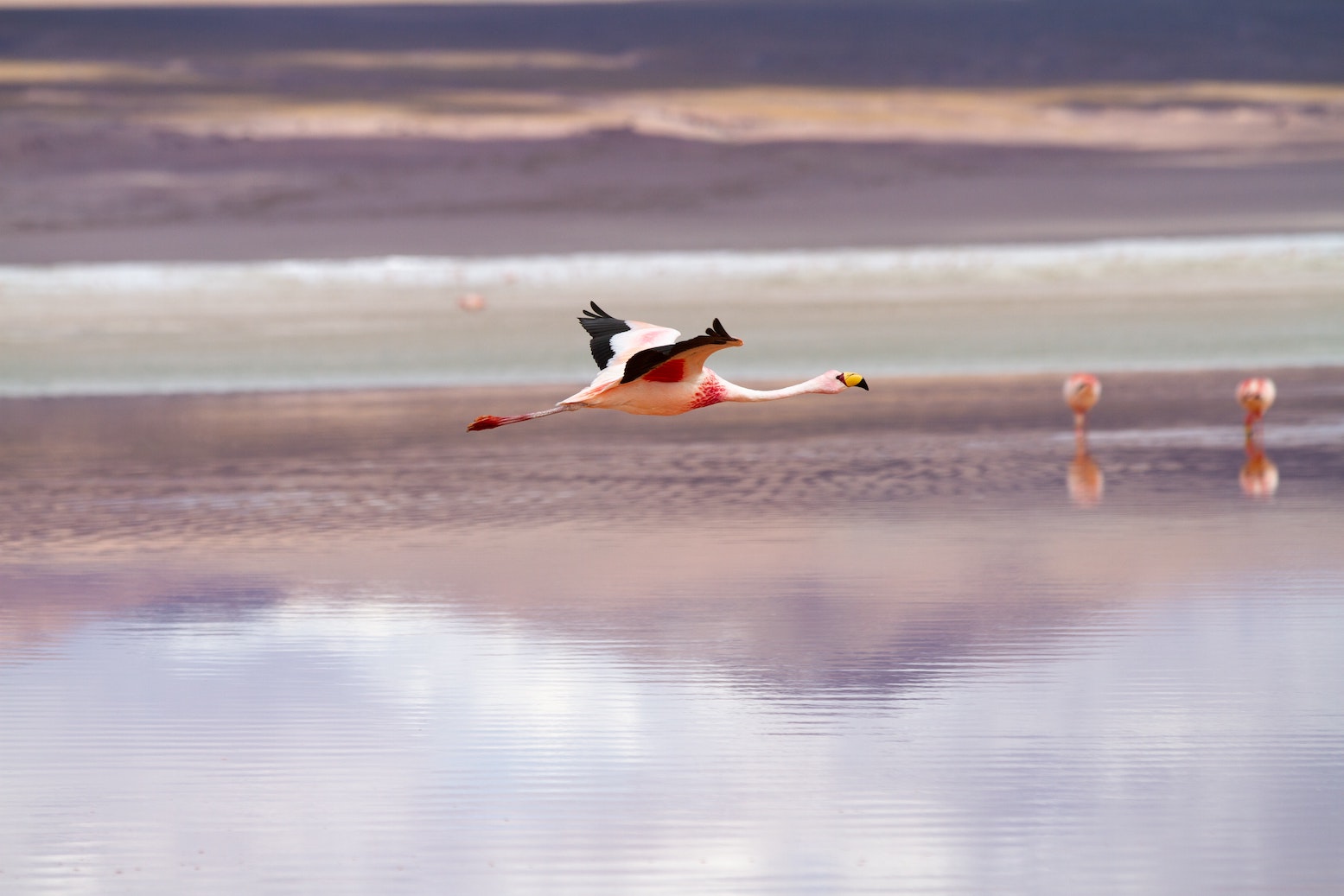
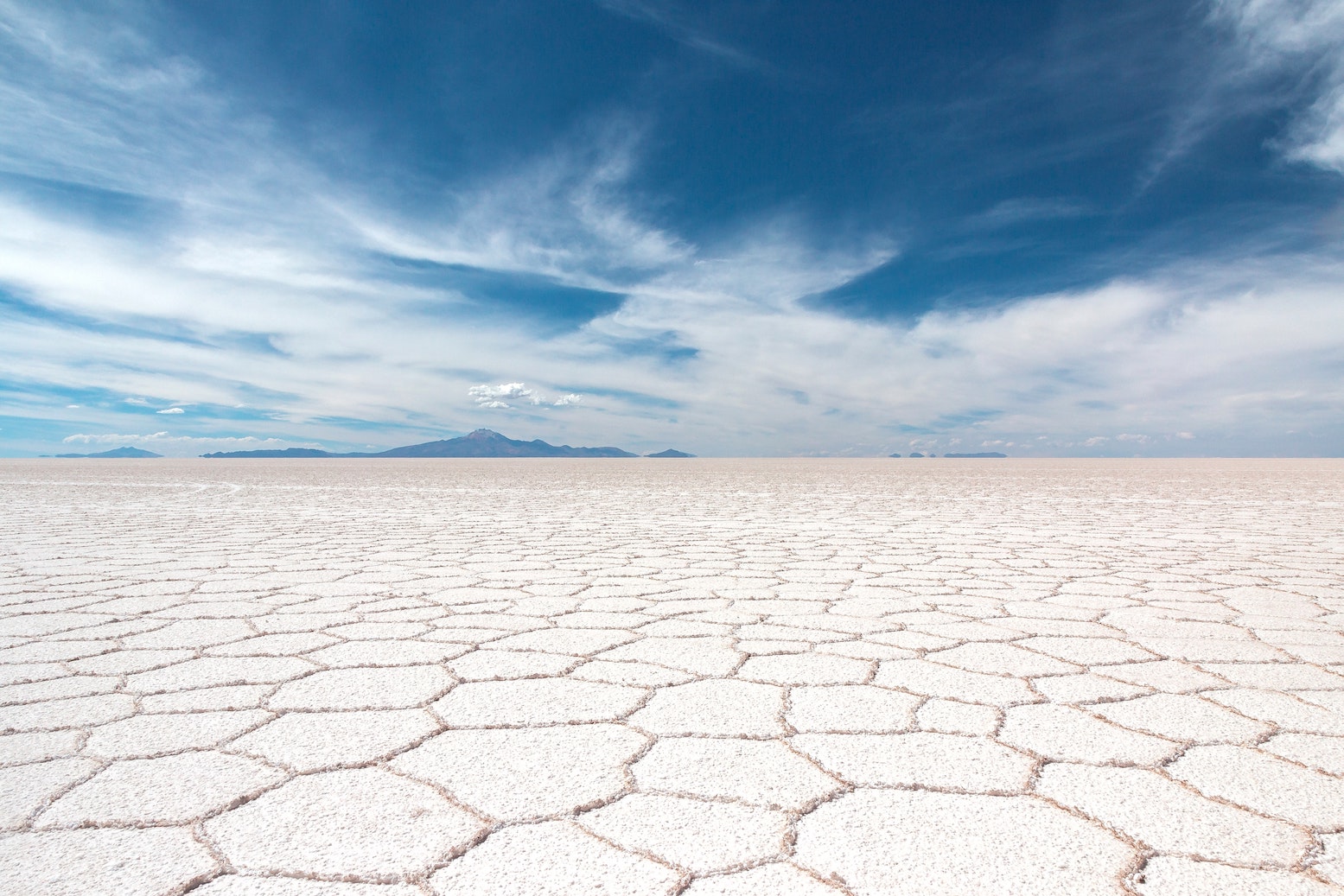
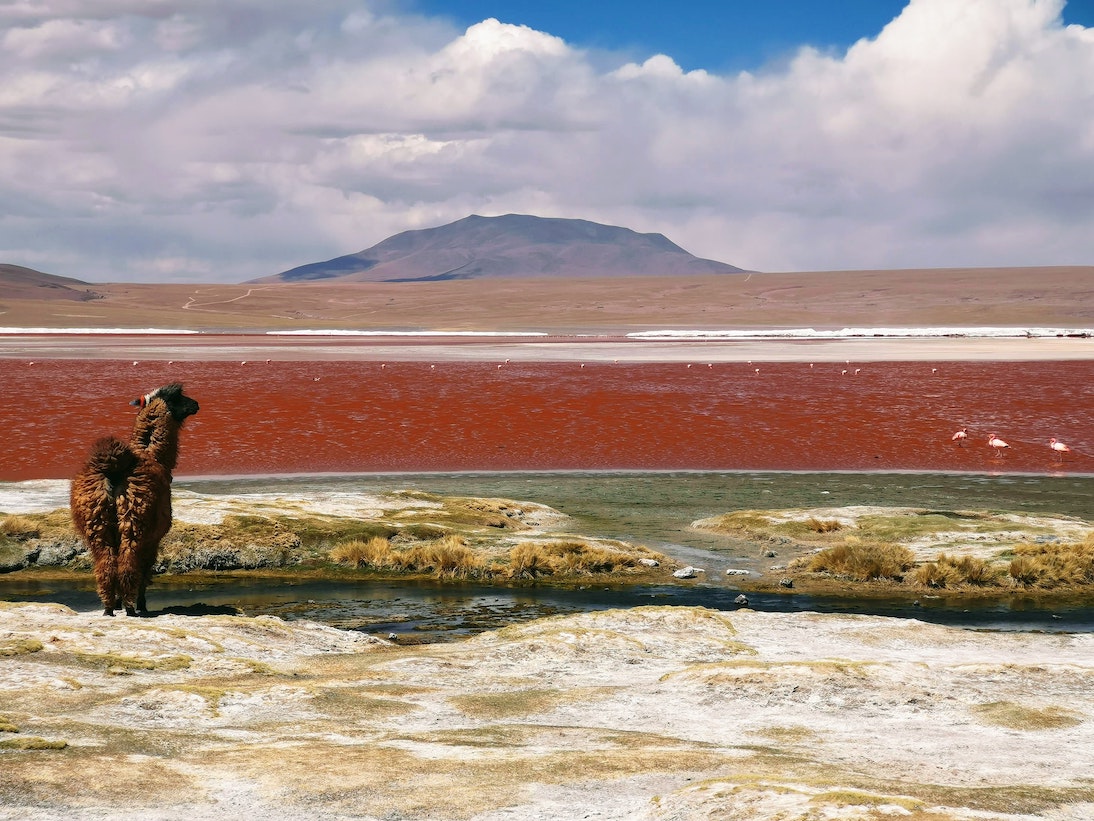
I recommend that you book the excursion to the salt desert directly on site, and even if you can get there by plane directly from La Paz, a trip by land would be better so as not to miss the immense Bolivian landscapes. You can do two types of excursions: either the circuit that takes you back to Uyuni from Uyuni or the one that takes you to San Pedro de Atacama in Chile. Be careful because there is not only the salt desert, there are also all the various lagoons that are one more beautiful than the other! There is the white lagoon, the blue one, the green one, the pink one, and the colored one; it is full of flamingos in the highlands as well as geysers and volcanoes. In my opinion, the best option is to get to Chile because you will cross a crazy border: a shack in the void between two volcanoes! Typically the excursions last about four days and among other things offer the possibility of sleeping in salt hotels, a very special experience but be careful because in the evening it is very cold and temperatures can even drop below zero.
Bolivia: when to go, how much it costs and what to eat
The best time to visit Bolivia in April / May and September / October, and where September / October is best for night temperatures! The general advice is to visit Bolivia during the dry season because the salt desert is wonderful when there is no water. true However I visited it in the rainy season and I assure you that even in that case it is an experience that you will never forget because in this desert when it rains there is about 10 cm of water that creates a sensational mirror with the sky above you!
Bolivia is certainly a very cheap state and probably the cheapest in all of South America: this is especially true for sleeping and public transport, not so much for excursions. These also cost a lot because Bolivia knows that tourism is one of the main sources of wealth in the whole country. It is a country with strong social differences, there are the very rich and there are the very poor, so when you evaluate an excursion, always evaluate this aspect very well, looking for those excursions that help the local economy, not those of the large international tour operators.
The sore point of Bolivia concerns food because despite borders with Chile, Peru (in my opinion, the cuisine is the best food in all of South America), Brazil, Paraguay, and Argentina, you don't eat well at all! Bolivian food, above all, is very fried and they have a strange way of making pasta because they first blow it up in the pan, making it black and then boil it in the water ... I never really understood why! If you are in Bolivia you must absolutely try Bolivian quinoa because quinoa is born in Bolivia on the highlands at over 4000 meters! But in this regard, I still push on the issue of awareness because the fashion of quinoa in the European, American, and Australian world has led to major food problems in Bolivia. A few decades ago the indigenous Bolivian population ate quinoa daily but now its price has skyrocketed: 97% of quinoa production is exported and this has caused the Bolivian diet to change radically. Today there are also major physical problems for indigenous peoples.